
Updated: 25 Aug 2026
The Dept. of Ed is moving programs to other agencies.
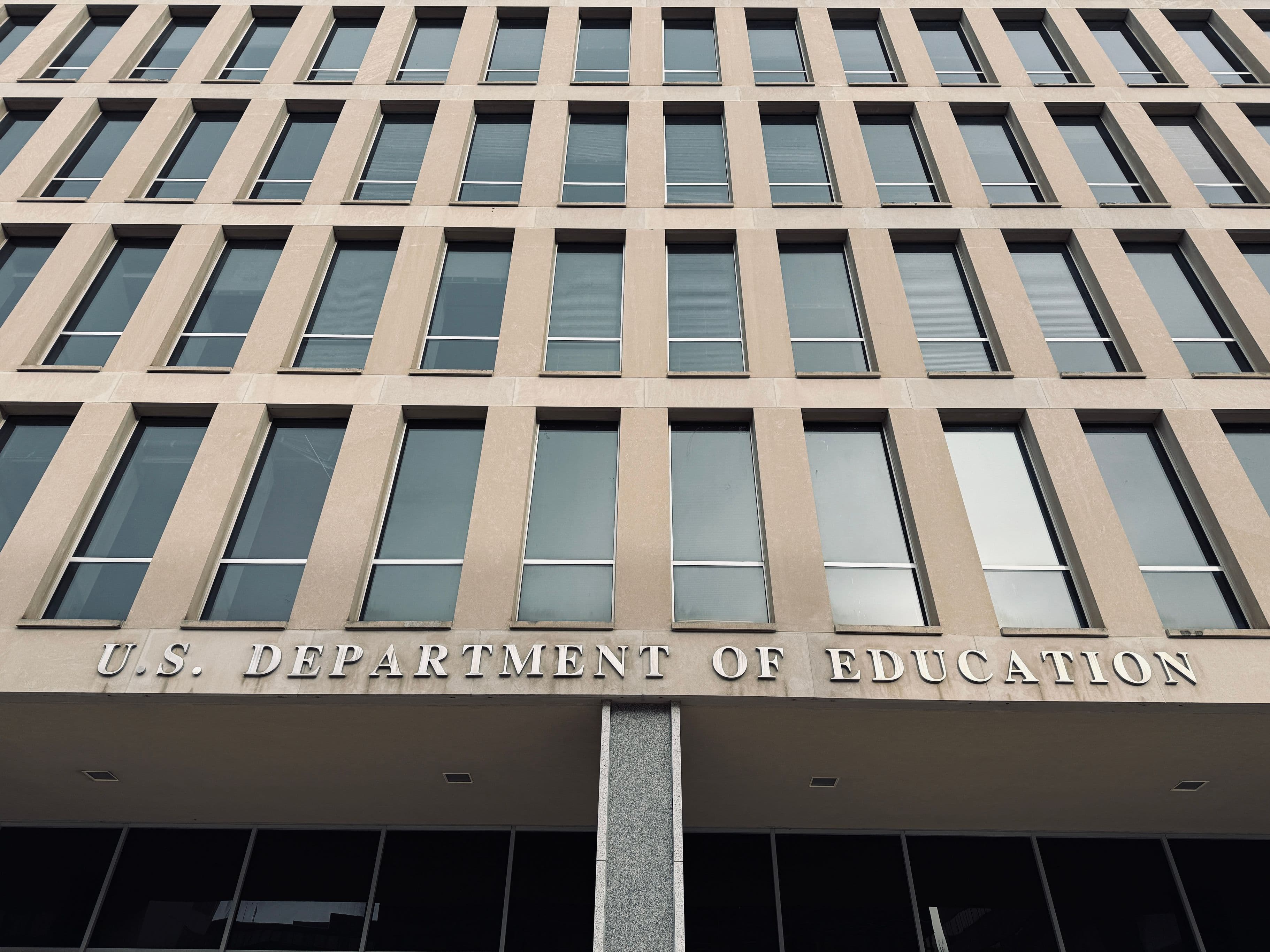
The Department of Education (USED) is being dismantled through interagency agreements (IAAs) that shift management of Title funds, grants, and key programs from the experienced, centralized, USED to other departments and through the shuttering of offices. Most recently, USED entered into agreements to transfer the Office of Special Education and Rehabilitative Services (OSERS) to the Department of Health and Humans Services (HHS), impacting the administration of programs for infants, toddlers, students, and individuals with disabilities. Additionally, the responsibilities of USED’s Office for Civil Rights (OCR) will be moved to the Department of Justice (DOJ). As of July 2026, the 14 IAAs in place affect at least 144 federal programs that are collectively responsible for tens of billions of dollars in education funding. Seventy-six of the programs will move to the Department of Labor; others will go to the Department of Interior (22), State Department (12), Health and Human Services (30), Department of Justice (3), and Department of the Treasury (1).
11.9%
Average share of Illinois school district budgets from federal funding
330
Open OCR cases in Illinois as of January 2025
Impact
Programming: Relegating education to incidental status in an array of agencies with other primary objectives can reduce education as a priority, inhibit cohesive national leadership, and make it easier to decrease education funding at the federal level. Additionally, differing priorities at receiving agencies can result in drastic changes to programs and inconsistencies in program requirements. For example, TRIO’s program priorities were altered from a college focus to a college and workforce focus, shrinking program eligibility for TRIO programs by two-thirds.
Grantees: Education agencies, providers, and grantees will likely need to learn new sets of rules and procedures, and how to navigate, apply for, and receive funding across multiple agencies. Contrary to the stated goal of reducing bureaucracy, this will almost certainly increase paperwork and administrative burden at the state and local level.
OSERS: OSERS being housed in USED was the product of years of advocacy to ensure free and appropriate public education that is tailored to meet the needs of all students– including those with severe disabilities or learning difficulties. Because HHS does not hold the same level of expertise in K-12 education as USED, there are concerns that transferring OSERS will shift its priority from an education-centered to a health-centered approach. While health services are an important part of supporting some students with disabilities, they are only one component of ensuring students receive the free and appropriate public education (FAPE) to which they are legally entitled. USED is uniquely positioned to protect students’ access to that education, raising concerns that moving OSERS to HHS could weaken OSERS’ focus on ensuring educational access.
OCR: USED’s Office for Civil Rights has historically focused specifically on getting school districts to change inappropriate/illegal practices, rather than penalizing violations, a practice more common in DOJ investigations. The shift in responsibilities may result in more monetary penalties rather than systemic/programmatic shifts within districts.
Where federal education programs are going
As of August 3, 2026, the Department of Education has 14 interagency agreements in place to move at least 144 federal programs, collectively responsible for tens of billions in education funding.
| Receiving agency | Number of programs | Programs |
|---|---|---|
| Department of Labor | 76 | Adult Education formula grants; American History and Civics Academies; American History and Civics--National Activities; Assistance for Arts Education Grant; Augustus F. Hawkins Center of Excellence Program; Basic Needs for Postsecondary Students Program; Career and Educational Pathways Exploration System Program; Center of educational Excellence for Black Teachers Program at Historically Black Colleges and Universities; Center of Excellence in spatial Computing Grant Program; Centers of Excellence for Veteran Student Success; Charter Schools Program- Charter Management Organizations; Charter Schools Program- Credit Enhancement Grant; Charter Schools Program- Developer Grant; Charter Schools Program- State Charter School Facilities Incentive Grant; Charter Schools Program- State Entity Grant; College Assistance Migrant program (CAMP); College Housing and Academic Facilities (CHAFL); Comprehensive Literacy State Development; Consolidated Grants to the Insular Areas; Demonstration Projects to Ensure Students with Disabilities Receive a Quality Higher Education; Developing Hispanic-Serving Institutions (DHSI) Program; Digital Learning Infrastructure and IT Modernization Pilot; Education for Homeless Children and Youths; Educational Opportunity Centers (TRIO); Fund for the Improvement of Postsecondary Education (FIPSE); Gaining Early Awareness and Readiness for Undergraduate Programs (GEAR UP); Graduate Assistance in Areas of National Need; High School Equivalency (HEP); Hispanic-Serving Institutions - Science, Technology, Engineering, or Mathematics and Articulation Program; Historically Black College and University Capital Financing (HBCU Capital Finance); Howard University; Impact Aid; Innovative Approaches to Literacy; Magnet Schools Assistance; Master’s Degree Programs at Historically Black Colleges and Universities; Master’s Degree Programs at Predominantly Black Institutions; Minority Science and Engineering Improvement Program; Model Comprehensive Transition and Postsecondary Programs for Students with Intellectual Disabilities; Modeling and Simulation Program; National Center for Information and Technical Support for Postsecondary Students with Disabilities; Open Textbooks Pilot Program; Perkins formula grants; Postsecondary Student Success Grant; Predominantly Black Institutions Competitive Program; Predominantly Black Institutions Formula Grant Program; Preschool Development Grant; Promoting Postbaccalaureate Opportunities for Hispanic Americans Program; Republic of Palau Grant; Research and Development Infrastructure Grant Program; Ronald E. McNair Postbaccalaureate Achievement Program (TRIO); Rural Postsecondary & Economic Development Grant Program; Strengthening Historically Black Colleges and Universities Program; Strengthening Historically Black Graduate Institutions Program; Strengthening Institutions grant program; Student Support Services (TRIO); Supporting Effective Educator Development; Talent Search (TRIO); Teacher and School Leader Incentive Grants; Teacher Quality Partnership Grant; Title I, Part A – Formula grants; Title I, Part B – State Assessment Grants; Title I, Part C – Migratory Children; Title I, Part D – Neglected and Delinquent Youth; Title II, Part A – Supporting Effective Instruction; Title III – English Language Acquisition; Title IV, Part A – Student Support and Academic Enrichment; Title IV, Part B – 21st Century Community Learning Centers (after-school programs); Title V – Rural and Low-Income School Achievement; Title V – Small, Rural School Achievement; Training Program for Federal TRIO Programs Staff (TRIO); Transition Programs for Students with Intellectual Disabilities Coordinating Center; Transitioning Gang-Involved Youth to Higher Education Program; Upward Bound (TRIO); Upward Bound Math-Science (TRIO); Veterans Upward Bound (TRIO); Washington, D.C., Scholarships for Opportunity and Results (SOAR) |
| Health & Human Services | 30 | American Printing House for the Blind; Child Care Access Means Parents in Schools (CCAMPIS); Full-Service Community Schools; Gallaudet University; Individuals with Disabilities Education Act (IDEA) Part B - Grants to States; Individuals with Disabilities Education Act (IDEA) Part B - Preschool Grants for Children with Disabilities; Individuals with Disabilities Education Act (IDEA) Part C - Grants for Infants and Toddlers; Individuals with Disabilities Education Act (IDEA) Part D - Parent Information Centers; Individuals with Disabilities Education Act (IDEA) Part D - Personnel Preparation; Individuals with Disabilities Education Act (IDEA) Part D - State Personnel Development; Individuals with Disabilities Education Act (IDEA) Part D - Technical Assistance and Dissemination; Individuals with Disabilities Education Act (IDEA) Part D - Technology, Media, and Materials; National Committee on Foreign Medical Education and Accreditation (NCFMEA); National Technical Institute for the Deaf; Promise Neighborhoods; Ready to Learn Programming Grant; Rehabilitation Services Administration: Client Assistance State Grants; Rehabilitation Services Administration: Demonstration and Training Programs; Rehabilitation Services Administration: Disability Innovation Fund; Rehabilitation Services Administration: Helen Keller National Center for Deaf/Blind Youth and Adults; Rehabilitation Services Administration: Protection and Advocacy of Individual Rights; Rehabilitation Services Administration: Randolph-Sheppard Vending Facility Program; Rehabilitation Services Administration: Services for Older Blind Individuals; Rehabilitation Services Administration: Supported Employment State Grants; Rehabilitation Services Administration: Training; Rehabilitation Services Administration: Vocational Rehabilitation State Grants; School Emergency Response to Violence (SERV); School Safety National Activities; Special Olympics Education Programs; Statewide Family Engagement Centers |
| Department of Interior | 22 | Alaska Native and Native Hawaiian-Serving Institutions; Alaska Native Education; American Indian Education Formula Grants; American Indian Education National Activities; American Indian Education-Related Research and Development Infrastructure Grant; American Indian Education-Related Special Education Grants for Infants and Families; American Indian Education-Related Special Education Grants to States; American Indian Tribally Controlled Colleges and Universities; American Indian Vocational Rehabilitation Services Program; American Rescue Plan - American Indian Resilience in Education (ARP-AIRE); Asian American and Native American Pacific Islander-Serving Institutions; Demonstration Grants for Indian Children (DEMO); Indian Education Professional Development Grant program; Native American and Alaska Native Children in School (NAM); Native American and Alaska Native Language Program; Native American Career and Technical Education Program; Native American Language Resource Center; Native American-Serving Nontribal Institutions; Native Hawaiian Career and Technical Education Program; Native Hawaiian Education; State-Tribal Education Partnership; Tribally Controlled Postsecondary Career and Technical Institutions Program |
| Department of State | 12 | American Overseas Research Centers (AORC); Business and International Education (BIE); Centers for International Business Education (CIBE); Foreign Language and Area Studies (FLAS) Fellowships Program; Fulbright-Hays Doctoral Dissertation Research Abroad (DDRA); Fulbright-Hays Group Projects Abroad (GPA); Fulbright-Hays Seminars Abroad; International Research and Studies (IRS); Language Resource Centers (LRC); National Resource Centers (NRC); Section 117 (Higher Education Act) Foreign Gift and Contract Reporting; Undergraduate International Studies and Foreign Language (UISFL) |
| Department of Justice | 3 | Office for Civil Rights; Privacy Program; Training and Advisory Services: Equity Assistance Centers |
| Department of Treasury | 1 | Student Loan Servicing |
| Total | 144 | Across 14 interagency agreements |

Possible Federal Action:
- Congress has not approved the closure or dismantling of USED and might consider putting an end to the transfer of programs and offices from USED to other agencies. Congress could instead ensure that USED is meeting congressionally required tasks consistent with Congressional intent.
- Congress might hold public hearings with Secretary McMahon and the secretaries from the receiving agencies on the transfer of education programs through interagency agreements and require the USED and receiving agencies to demonstrate that these changes will not disrupt services or weaken accountability.
- Congress could direct the Government Accountability Office (GAO) to investigate the legality of the 14 interagency agreements and assess USED’s authority to enter into those agreements.

Possible State Action:
- Districts, organizations, and advocates should collect and share expected impact with members of Congress and the Illinois Attorney General’s Office.
- Illinois state agency leaders and advocates should support school leaders and other providers to ensure they are aware of new and changing procedures.

Learn how federal changes are impacting Illinois school communities
How have you seen federal changes impact interagency agreements in your community?
Share Your StoryMake Your Voice Heard
Illinois families, educators, and community members can help ensure public education works for every child and student. Learn about concrete actions to start taking today.